
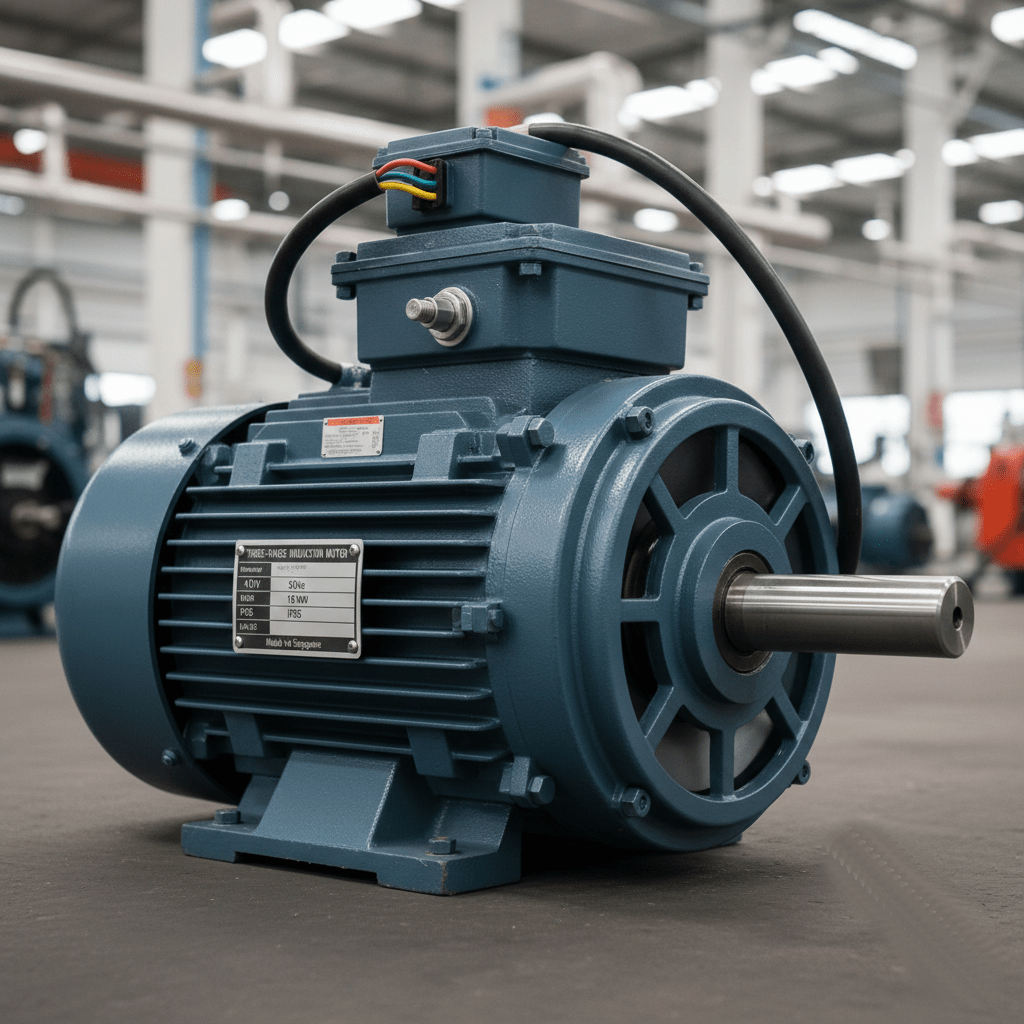
Understanding the differences between motor types doesn’t have to be a headache. If you are looking into the world of the induction motor, you will primarily encounter two flavors: single-phase and three-phase.
While both rely on electromagnetic induction to turn electrical energy into mechanical motion, they are built for very different jobs. Here is an easy-to-understand breakdown of their key differences.
1. Power Supply and Wiring
The most basic difference is how they “plug in.”
- Single-Phase: Uses two wires (Phase and Neutral). This is the standard electricity found in most homes and small offices.
- Three-Phase: Uses three or four wires. This is industrial-grade power typically found in factories and large commercial buildings.
2. The Starting Mechanism (Self-Starting?)
This is the biggest engineering hurdle for an induction motor.
- Single-Phase: These are not self-starting. Because the magnetic field simply pulsates rather than rotates, the motor needs a “push” to get going. This is why you often see a capacitor attached to these motors to provide that initial kick.
- Three-Phase: These are self-starting. The three currents create a naturally rotating magnetic field (RMF) that drags the rotor along immediately upon power-up.
3. Power Efficiency and Consistency
Think of this like a rowing team.
- Single-Phase: Like a single rower. There is a momentary pause in power delivery as the stroke resets. This leads to more vibration and lower efficiency.
- Three-Phase: Like a team of three rowers perfectly timed. The power delivery is constant and smooth, leading to higher efficiency and less “hum” or vibration.
4. Maintenance and Construction
- Single-Phase: More complex internally because of the extra starting switches, centrifugal switches, or capacitors required. More parts mean more things can eventually wear out.
- Three-Phase: Remarkably simple and rugged. Since they don’t need capacitors or starting switches, they are smaller, lighter, and last a very long time with minimal maintenance.
5. Typical Applications
Where will you find these motors in the real world?
- Single-Phase: Domestic appliances like fans, refrigerators, washing machines, and small power tools.
- Three-Phase: Heavy-duty industrial equipment like large pumps, conveyor belts, elevators, and factory compressors.
For more in-depth technical guides, maintenance tips and a full catalog of high-performance hardware, feel free to explore the extensive motor knowledge base available on our website. You can also visit Greentec advanced engineered to discover energy-efficient solutions and advanced industrial motor technologies.